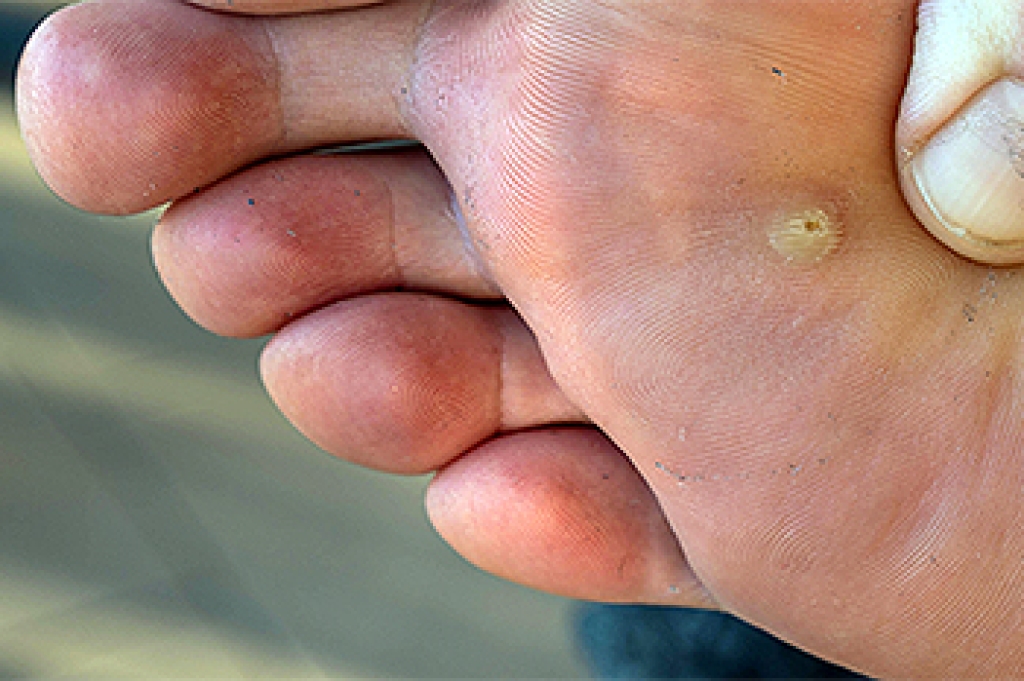
Plantar warts are small skin growths that develop on the bottom of the foot. They are caused by the human papillomavirus, or HPV, which enters the skin through tiny cuts or weak areas. Unlike a callus, which develops from pressure and friction, a plantar wart is caused by a viral infection. These warts frequently appear on weight-bearing parts of the foot, making them uncomfortable while standing or walking. A plantar wart has a rough surface and sometimes contains tiny dark spots. These spots are small blood vessels inside the wart. Some people develop a single wart, while others develop several warts grouped together.
The symptoms of plantar warts vary depending on their size and location. Many people experience pain, tenderness, and a feeling that something is stuck beneath the foot. The wart can become flattened because of pressure from standing and walking. The surrounding skin sometimes becomes thick and firm. Pain can increase when walking long distances or standing for extended periods of time. Because plantar warts can resemble corns, calluses, and other skin conditions, an accurate diagnosis is important. A podiatrist can examine the affected area and determine whether the growth is a plantar wart or another foot problem requiring different treatment.
A podiatrist has several ways to treat plantar warts and reduce discomfort. Treatment depends on the size, depth, and location of the wart. Professional care includes freezing the wart, removing damaged tissue, or using medications that target the infected skin. Some warts require more than one treatment session before they are completely removed. A podiatrist can also monitor the area to make sure the wart is responding properly to treatment. Early care can help relieve pain and prevent the wart from becoming larger or spreading to nearby skin. If you have plantar warts, it is suggested that you schedule an appointment with a podiatrist for effective relief and treatment options.
Plantar warts can be very uncomfortable. If you need your feet checked, contact Tanya R. Sellers-Hannibal, DPM from Maryland. Our doctor will assist you with all of your foot and ankle needs.
About Plantar Warts
Plantar warts are the result of HPV, or human papillomavirus, getting into open wounds on the feet. They are mostly found on the heels or balls of the feet.
While plantar warts are generally harmless, those experiencing excessive pain or those suffering from diabetes or a compromised immune system require immediate medical care. Plantar warts are easily diagnosed, usually through scraping off a bit of rough skin or by getting a biopsy.
Symptoms
- Lesions on the bottom of your feet, usually rough and grainy
- Hard or thick callused spots
- Wart seeds, which are small clotted blood vessels that look like little black spots
- Pain, discomfort, or tenderness of your feet when walking or standing
Treatment
- Freezing
- Electric tool removal
- Laser Treatment
- Topical Creams (prescription only)
- Over-the-counter medications
To help prevent developing plantar warts, avoid walking barefoot over abrasive surfaces that can cause cuts or wounds for HPV to get into. Avoiding direct contact with other warts, as well as not picking or rubbing existing warts, can help prevent the further spread of plantar warts. However, if you think you have developed plantar warts, speak to your podiatrist. He or she can diagnose the warts on your feet and recommend the appropriate treatment options.
If you have any questions, please feel free to contact our office located in Owings Mills, MD . We offer the newest diagnostic and treatment technologies for all your foot care needs.
