If you're experiencing ankle pain, you may be suffering from an ankle injury. Sprains, fractures, Achilles tendonitis, and Achilles tendon ruptures are just some examples of potential ankle injuries. Don't wait for care for an ankle injury, as it may worsen over time. We can help!
Neglecting foot health can lead to pain, skin problems, nail concerns, and changes in walking that place strain on the ankles and lower legs. Taking care of your feet is essential because they support body weight, absorb impact, and help maintain balance with every step. Simple habits like keeping feet clean and dry, trimming toenails properly, and wearing shoes that fit well can reduce the risk of irritation, infection, and deformities. Daily attention also makes it easier to notice changes in skin color, swelling, thickened nails, or areas of pressure that may signal a developing problem. As people age or remain on their feet for long periods, flexibility and strength in the feet can decline, increasing the risk of instability and injury. A podiatrist can evaluate foot structure, identify early concerns, and recommend care or treatment to protect mobility. If you have foot discomfort or notice unusual changes, it is suggested that you make an appointment with a podiatrist for an exam and treatment.
Everyday foot care is very important to prevent infection and other foot ailments. If you need your feet checked, contact Tanya R. Sellers-Hannibal, DPM from Maryland. Our doctor can provide the care you need to keep you pain-free and on your feet.
Everyday Foot Care
Often, people take care of their bodies, face and hair more so than they do for their feet. But the feet are a very important aspect of our bodies, and one that we should pay more attention to. Without our feet, we would not be able to perform most daily tasks.
It is best to check your feet regularly to make sure there are no new bruises or cuts that you may not have noticed before. For dry feet, moisturizer can easily be a remedy and can be applied as often as necessary to the affected areas. Wearing shoes that fit well can also help you maintain good foot health, as well as making it easier to walk and do daily activities without the stress or pain of ill-fitting shoes, high heels, or even flip flops. Wearing clean socks with closed shoes is important to ensure that sweat and bacteria do not accumulate within the shoe. Clean socks help to prevent Athlete’s foot, fungi problems, bad odors, and can absorb sweat.
If you have any questions, please feel free to contact our office located in Owings Mills, MD. We offer the newest diagnostic and treatment technologies for all your foot care needs.
Gout can lead to several foot-related complications when flares repeat over time. Ongoing inflammation in the toes and ankles can damage cartilage and bone, causing joint deformity, stiffness, and limits in motion. Painful flares can interfere with walking, balance, and daily activities, increasing strain on other areas of the foot. Skin over inflamed joints can become fragile, raising the risk of cracks, sores, or infection, especially when swelling alters shoe fit. Changes in circulation linked to gout can also slow healing in the feet and increase the risk of ulcers. Long-term joint damage can result in instability that raises the chance of falls. A podiatrist can assess joint changes and recommend treatment or surgery. If you have complications from gout, it is suggested that you make an appointment with a podiatrist for a diagnosis and options for help in managing this condition.
Gout is a painful condition that can be treated. If you are seeking treatment, contact Tanya R. Sellers-Hannibal, DPM from Maryland. Our doctor will treat your foot and ankle needs.
What Is Gout?
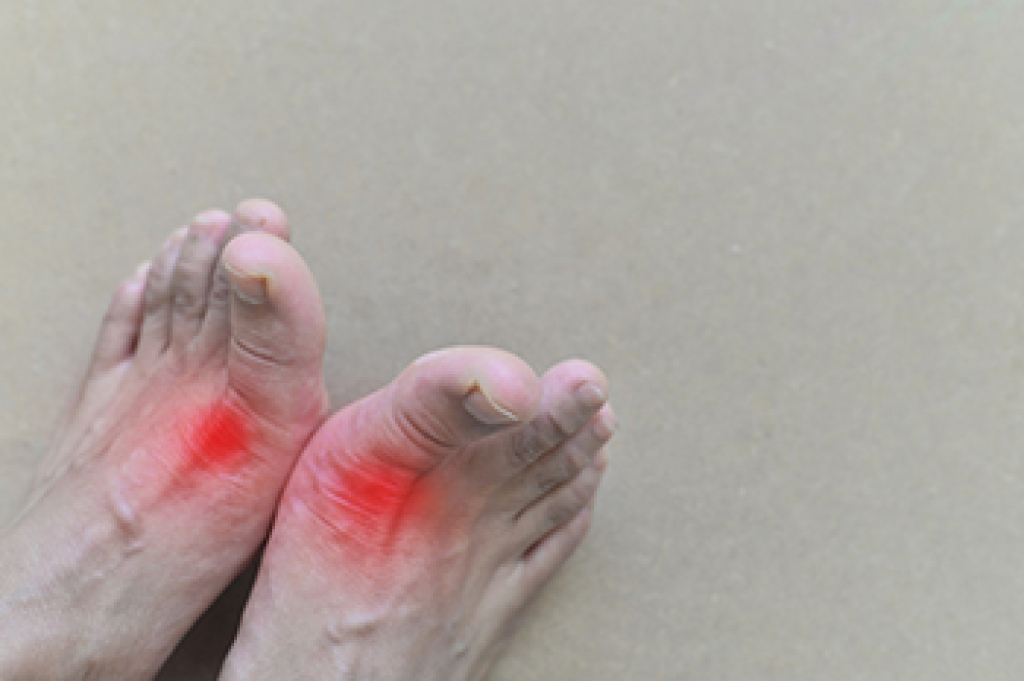
Gout is a form of arthritis that is characterized by sudden, severe attacks of pain, redness, and tenderness in the joints. The condition usually affects the joint at the base of the big toe. A gout attack can occur at any random time, such as the middle of the night while you are asleep.
Symptoms
Intense Joint Pain - Usually around the large joint of your big toe, and it most severe within the first four to twelve hours
Lingering Discomfort - Joint discomfort may last from a few days to a few weeks
Inflammation and Redness -Affected joints may become swollen, tender, warm and red
Limited Range of Motion - May experience a decrease in joint mobility
Risk Factors
Genetics - If family members have gout, you’re more likely to have it
Medications - Diuretic medications can raise uric acid levels
Gender/Age - Gout is more common in men until the age of 60. It is believed that estrogen protects women until that point
Diet - Eating red meat and shellfish increases your risk
Alcohol - Having more than two alcoholic drinks per day increases your risk
Obesity - Obese people are at a higher risk for gout
Prior to visiting your podiatrist to receive treatment for gout, there are a few things you should do beforehand. If you have gout you should write down your symptoms--including when they started and how often you experience them, important medical information you may have, and any questions you may have. Writing down these three things will help your podiatrist in assessing your specific situation so that he or she may provide the best route of treatment for you.
If you have any questions, please feel free to contact our office located in Owings Mills, MD. We offer the newest diagnostic and treatment technologies for all your foot care needs.
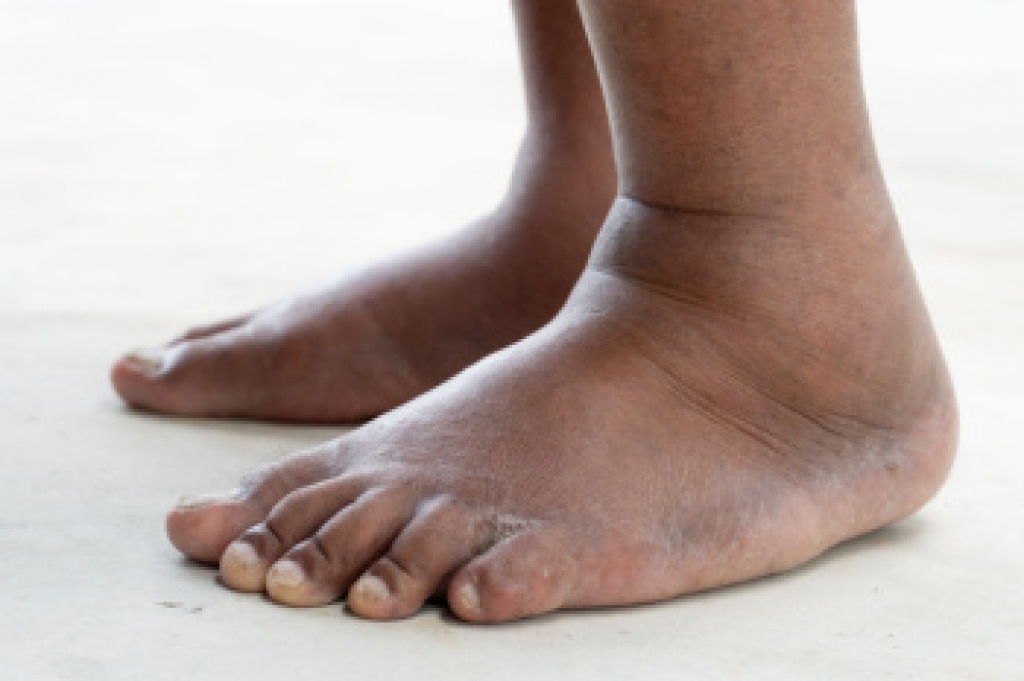
Swelling of the feet, also called edema, occurs when excess fluid collects in the tissues of the lower extremities. Symptoms include puffiness, tight or shiny skin, aching, and heaviness, often worsening by the end of the day. The feet and ankles may look enlarged, feel warm, and leave an indentation when pressed. It may feel uncomfortable, stiff, or painful in shoes and during walking. Causes range from prolonged standing, injury, and obesity to circulation issues or kidney conditions. A podiatrist can help from the start by evaluating medical history, examining the feet and ankles, assessing circulation, and identifying potential underlying causes. Treatment options include footwear guidance, elevation strategies, and targeted treatment of contributing foot conditions. Early podiatric care helps reduce discomfort, prevent skin breakdown, and improve mobility. If you are dealing with ongoing swelling of the feet, it is suggested that you make an appointment with a podiatrist.
Swollen feet can be a sign of an underlying condition. If you have any concerns, contact Tanya R. Sellers-Hannibal, DPM of Maryland. Our doctor can provide the care you need to keep you pain-free and on your feet.
Swollen feet are a common ailment among pregnant women and people who stand or sit for extended periods. Aging may increase the possibility of swollen feet and patients who are obese often notice when their feet are swelling too. There may be medical reasons why swollen feet occur:
Phlebitis - A condition that causes the veins to become inflamed and can also cause leg pain.
Liver disease - This may lead to low blood levels of albumin which is a protein. This can cause fluid in the blood to pass into the tissues and several areas of the body can become swollen.
Heart failure - When the heart doesn’t pump properly the blood that is normally pumped back to the heart can pool in the veins of the legs causing swollen feet.
Kidney disease - One of the main functions of the kidneys is releasing excess fluid in the body. This type of condition can make it difficult for the kidneys to function properly, and as a result the feet may become swollen.
Deep-vein thrombosis (DVT)- This is a serious condition where blood clots form in the veins of the legs. They can block the return of blood from the legs to the heart which may cause the feet to swell. It is important to be treated by a podiatrist if this condition is present.
Swollen feet can also be caused by bone and tendon conditions, including fractures, arthritis, and tendinitis. Additionally, there may be skin and toenail conditions and an infection may cause the feet to swell. Patients who take medicine to treat high blood pressure may be prone to getting swollen feet.
Many patients elevate their feet to help relieve the swelling and this is generally a temporary remedy. When a podiatrist is consulted the reason behind the swelling can be uncovered and subsequently treated.
If you have any questions please contact our office located in Owings Mills, MD. We offer the newest diagnostic and treatment technologies for all your foot and ankle needs.
Rheumatoid arthritis is an autoimmune condition in which the body mistakenly attacks its own joints, and the small joints of the toes are often among the first to show signs of trouble. Early signs may include stiffness in the morning, swelling that makes shoes feel tight, or tenderness when pushing off during walking. As the condition progresses, the joints can lose stability, causing the toes to drift, curl, or feel less flexible than before. Some people develop pressure beneath the ball of the foot as alignment shifts, which can lead to discomfort with even short periods of standing. These changes can make movement more tiring and limit comfortable footwear choices. A podiatrist can assess the joints, recommend supportive shoes, provide inserts that improve alignment, and offer targeted treatments that ease irritation. If your toes are changing or becoming painful due to rheumatoid arthritis, it is suggested that you see a podiatrist for effective relief and management tips.
Because RA affects more than just your joints, including the joints in your feet and ankles, it is important to seek early diagnosis from your podiatrist if you feel like the pain in your feet might be caused by RA. For more information, contact Tanya R. Sellers-Hannibal, DPM of Maryland. Our doctor will assist you with all of your podiatric concerns.
What Is Rheumatoid Arthritis?
Rheumatoid Arthritis (RA) is an autoimmune disorder in which the body’s own immune system attacks the membranes surrounding the joints. Inflammation of the lining and eventually the destruction of the joint’s cartilage and bone occur, causing severe pain and immobility.
Rheumatoid Arthritis of the Feet
Although RA usually attacks multiple bones and joints throughout the entire body, almost 90 percent of cases result in pain in the foot or ankle area.
Symptoms
Swelling and pain in the feet
Stiffness in the feet
Pain on the ball or sole of feet
Joint shift and deformation
Diagnosis
Quick diagnosis of RA in the feet is important so that the podiatrist can treat the area effectively. Your doctor will ask you about your medical history, occupation, and lifestyle to determine the origin of the condition. Rheumatoid Factor tests help to determine if someone is affected by the disease.
If you have any questions, please feel free to contact our office located in Owings Mills, MD. We offer the newest diagnostic and treatment technologies for all your foot care needs.